World's first Real-time drug‑device intervention for post‑trauma disorder prevention.
Millions live with post-trauma. Every existing treatment waits for the damage, then manages the symptoms. TraumaShield changes the equation.
They save the life.
Then they lose the person.
A paramedic reaches a car before the fire does. A soldier carries his friend out. A nurse holds a hand through the worst night of someone's life. They are extraordinary at what they do — and they do it again tomorrow.
But months later, the person they saved cannot sleep. Cannot work. Cannot be in a room with the door closed. The body healed. The mind did not.
We are not here to replace the heroes.
We are here to give them one more thing to carry — and one more life to save.
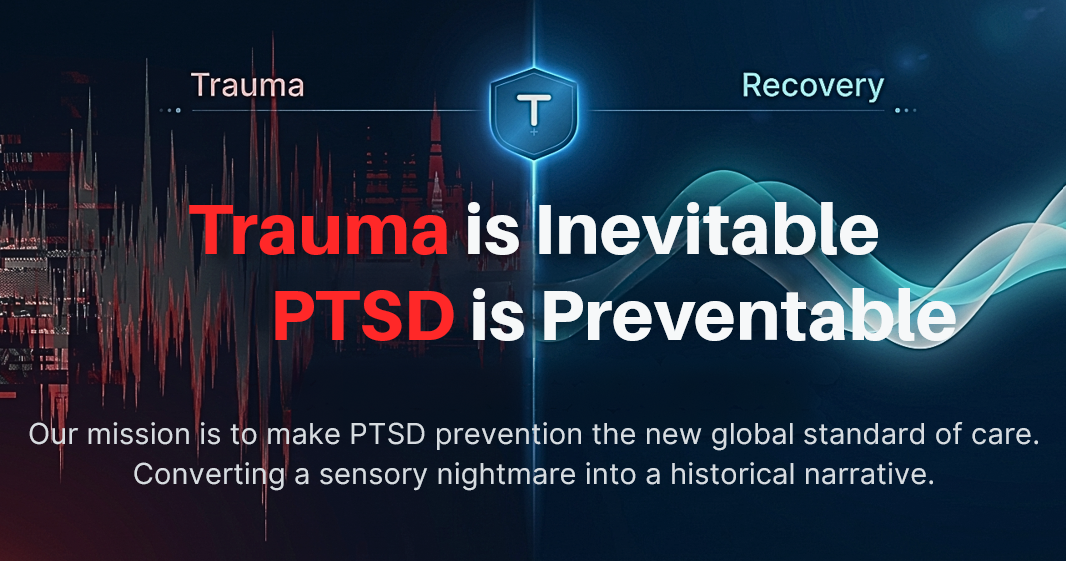
Trauma is inevitable.
PTSD is preventable.
We are building a world where trauma becomes a memory, not a lifelong disorder — a world where post-trauma disorders no longer exist, and where PTSD, depression, anxiety, addiction and phobias are prevented and treated at their core.
Trauma strikes in an instant — and every day, first responders fight to pull people back from the edge. They save lives with extraordinary skill, yet the most devastating wound is the one no one can treat.
For millions, PTSD becomes the real aftermath. It steals decades of wellbeing, productivity, and human potential. It is invisible, but it is catastrophic — for individuals, families, health systems, and entire economies.
TraumaShield exists because this outcome is no longer acceptable.
TraumaShield is on a mission to lead the world toward a better future — one where the worst moment of a person's life does not become the rest of it.
How it worksAddressing a
therapeutic gap.
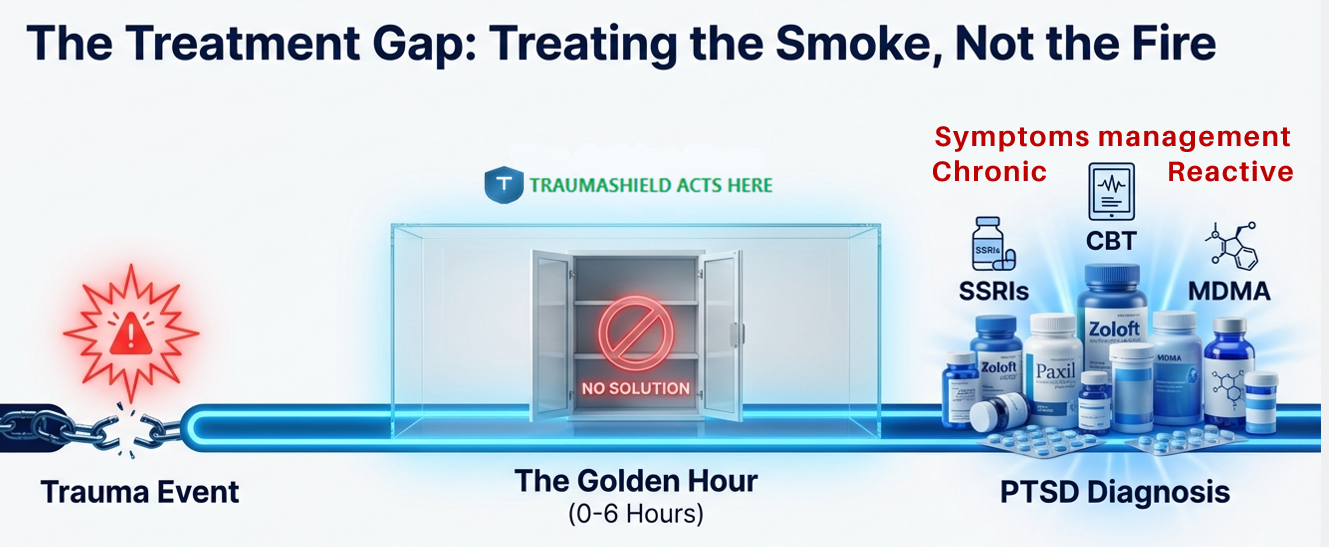
Post-traumatic stress disorder is a devastating mental health crisis — yet no approved solution prevents it. Current treatments manage symptoms long after the damage is done.
There is no FDA-approved prevention for the critical "golden hours" post-trauma. That is the gap TraumaShield was built to close.
The mental
tourniquet.
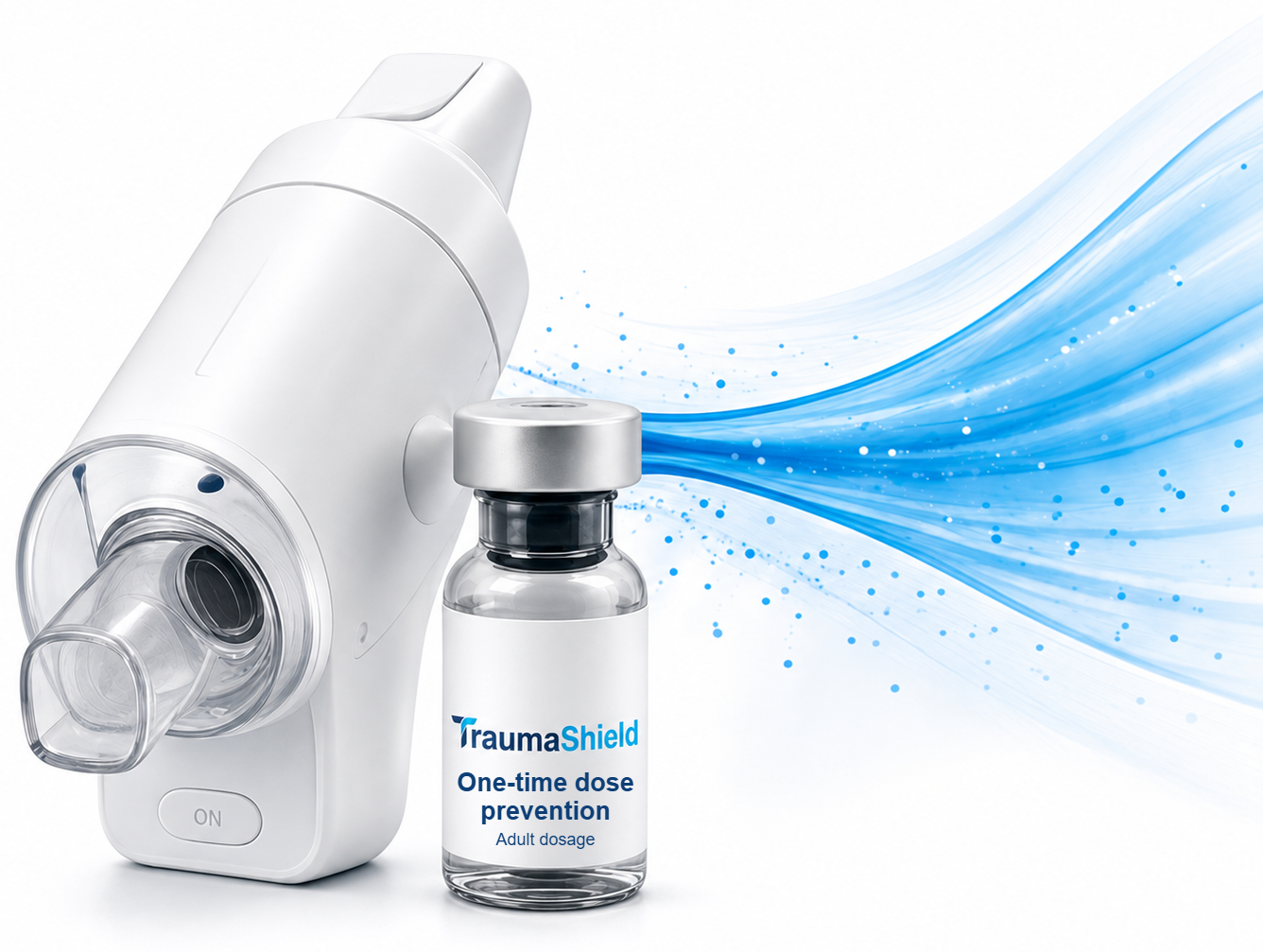
A field-ready device pairs with an FDA-approved agent, reaching patients inside the 0-6 hour window to block fear-memory consolidation and restore healthy contextual memory before PTSD can form.
Patient inhales the agent via integrated mask immediately post-trauma.
Agent modulates GABA + NMDA pathways during the memory consolidation window.
Fear memory consolidation blocked. Event encoded as history, not nightmare.
Medicine has closed
every window but this one.
Three centuries of medicine is one story told repeatedly: intervene earlier, and the catastrophe never happens. Every step below was impossible until someone did it.
Stop the bleeding at the point of injury, before it becomes fatal. The first true field intervention.
Prevent the disease instead of treating the dying. The idea that changed public health forever.
Act after exposure but before the disease takes hold — the first proof that a closing window can be used.
A window measured in hours becomes an accepted medical category.
Epinephrine was a century old. Putting a known drug into a device anyone could use created a multi-billion-dollar standard of care.
Post-exposure prevention turns a death sentence into a protocol.
Naloxone had sat in hospitals for decades. A nasal format in every first-responder kit turned it into public infrastructure.
A decades-old anaesthetic became a blockbuster psychiatric therapy through a second medical use — the exact regulatory pathway we are on.
230 years after the first vaccine, the most devastating psychiatric injury of our time still has no approved prevention. The window is open. Now it is time to act.
Because the compound's original patent holders had no reason to look at trauma, and nobody owned the delivery problem in the golden hour. TraumaShield holds a 20-year method-of-use patent on the second medical use and the combination device. The science is novel. The playbook is not.
We now understand memory consolidation well enough to interrupt it. That was not true a decade ago.
Wars, mass-casualty events and a global mental-health crisis are generating trauma faster than any system can absorb.
The same urgency that built this capability can now be turned toward protecting the people who carry its cost.
reduction in PTSD incidence.
In an independent human study of surgical trauma, PTSD incidence at one-month follow-up fell from 23.2% under standard care to 12.2%. Reproduced across preclinical SEFL models.
The difference is
one intervention.
13 million Americans are diagnosed with PTSD and the number grows with every conflict.
$232B a year is spent managing symptoms that were never prevented.
Careers end. Marriages end. Some lives end. Decades of human potential quietly disappear.
First responders keep saving bodies, and keep losing the people inside them.
The right team
for the mission.
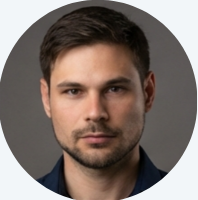
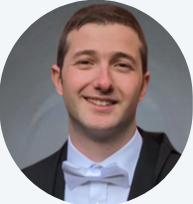
This is not a first attempt at building a company - it is a group of people who have already shaped the field they are now trying to change.
Every mission was impossible until someone solved it. With the right team, it is time to rethink the impossible.
Meet the team






Rethink the
impossible with us.
If you are aligned with the mission and ready for the challenge, join us.
Pre-Disclosure · Limited Access · Qualified Investors Only